
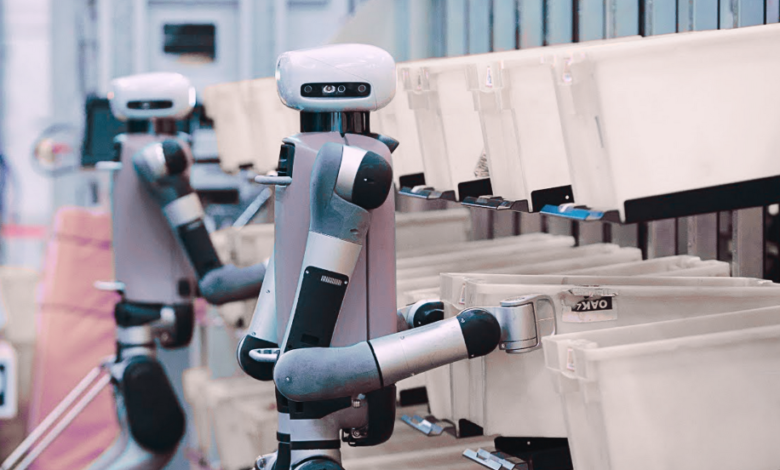
The next generation of consumer robotics is poised to reshape everyday life significantly. Advances in artificial intelligence and machine learning enable these robots to perform a variety of tasks, from household chores to personal companionship. Their ability to learn and adapt enhances user interactions, promising a future where they play a vital role in fostering independence. However, challenges such as ethical considerations and accessibility remain critical. What implications will these factors have on their integration into society?
Advancements in Artificial Intelligence and Machine Learning
As the landscape of consumer robotics evolves, advancements in artificial intelligence (AI) and machine learning (ML) have become pivotal in enhancing the capabilities and functionalities of these devices.
AI algorithms are now more sophisticated, enabling robots to learn from their environments.
Machine learning advancements empower these systems with adaptability, allowing for improved user interactions and autonomous decision-making, ultimately fostering a greater sense of freedom for consumers.
See also: The Importance of Sustainable Technology
Versatile Applications of Consumer Robots
While the integration of AI and ML has significantly enhanced the functionality of consumer robots, their versatile applications extend far beyond simple automation tasks.
These robots serve as personal assistants, managing schedules and providing companionship, while also playing crucial roles in home automation, optimizing energy use and security.
Their adaptability empowers users, fostering a sense of independence and freedom in daily life.
The Future of Human-Robot Interaction
The evolution of technology is driving a transformative shift in human-robot interaction, fundamentally altering how individuals engage with robotic systems in their daily lives.
As robots increasingly exhibit emotional intelligence, social acceptance grows, paving the way for deeper connections.
This future promises enhanced collaboration, where robots not only serve functional roles but also understand and respond to human emotions, enriching everyday experiences.
Conclusion
In a world where robots may soon hold the keys to our independence, the irony lies in humanity’s reliance on these machines for emotional connections. As they learn to navigate our homes and lives, one might wonder if we are training them to assist or to replace us. Ultimately, while advanced AI promises enhanced convenience, it also invites a paradox: the more we empower these robots, the more we risk diminishing our own roles in the tapestry of daily life.


